


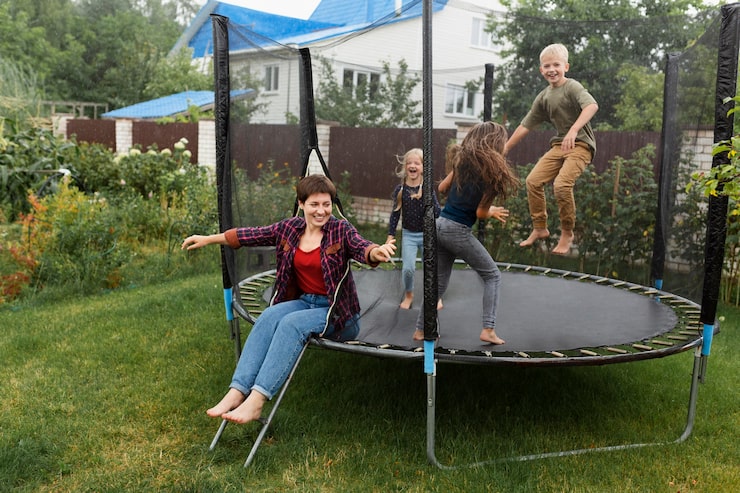
Trampolines have come a long way from the bulky, frame-heavy structures that once dominated backyard spaces. Today, homeowners who want the fun and fitness benefits of a trampoline without the visual bulk of a traditional above ground model are turning to inground trampolines in growing numbers. Among the most popular options in this category, 14 foot inground trampolines stand out as the ideal choice for families who want generous jumping space, a clean backyard aesthetic, and a safer overall setup for their children.
What Makes Inground Trampolines Different
The fundamental difference between an inground trampoline and a traditional above ground model is exactly what the name suggests. Instead of sitting on top of a steel frame elevated several feet above the ground, an inground trampoline is installed inside a pit dug into your yard so that the jumping surface sits flush with or just slightly above ground level.
This design change has practical consequences that go beyond aesthetics. The low profile of 14 foot inground trampolines means that if a jumper bounces off the edge of the mat, they land on the surrounding grass rather than falling two or three feet to the ground below. This alone represents a meaningful safety improvement over traditional above ground models, particularly for younger children who are still developing their coordination and spatial awareness.
From a visual standpoint, inground trampolines transform what was once a dominant backyard structure into something that integrates naturally with your outdoor space. Your yard retains its open, usable feel, and the trampoline complements the landscape rather than competing with it.
Why 14 Foot Inground Trampolines Are the Right Size for Most Families
The 14 foot diameter is consistently one of the best-selling sizes in the inground trampoline category, and the reasons mirror why it performs so well in the above ground market. It provides enough jumping surface to accommodate children of different ages simultaneously, gives older kids and teenagers the space they need to practice jumps and skills confidently, and fits comfortably within the backyard dimensions of most residential properties.
Smaller inground trampolines in the 10 or 12 foot range can feel limiting quickly, especially as children grow. Larger models at 15 or 16 feet require a significantly larger excavation, more complex installation, and a bigger overall footprint in your yard. The 14 foot size threads this needle perfectly, delivering a premium jumping experience without demanding premium space or premium installation costs.
Planning the Installation of 14 Foot Inground Trampolines
Installing an inground trampoline is a more involved process than setting up an above ground model, and proper planning before the first shovel goes into the ground is essential to a successful outcome.
The excavation is the most significant part of the project. A circular pit needs to be dug to a diameter slightly larger than the trampoline frame and to a depth that allows the jumping surface to sit at the desired height relative to ground level. Most 14 foot inground trampolines require a pit depth of approximately three feet, though this can vary depending on the specific model and how much of the frame sits above the ground line.
Drainage is a critical planning consideration that is easy to underestimate. A hole in the ground will collect water after rain, and without proper drainage, that water can pool under the trampoline, create mud, damage the frame over time, and make the jumping surface unsafe. Gravel drainage layers at the base of the pit, perforated drainage pipes, or a combination of both are standard solutions that professional installers incorporate into every project.
Retaining walls around the perimeter of the pit prevent the surrounding soil from collapsing inward over time. These can be constructed from treated timber, concrete blocks, or purpose-built retaining wall systems specifically designed for inground trampoline installations. Many manufacturers of 14 foot inground trampolines offer retaining wall kits as accessories, and using these ensures compatibility with your specific model.
Choosing the Right 14 Foot Inground Trampoline
The trampoline itself, separate from the installation, should be evaluated with the same attention to quality and safety that applies to any trampoline purchase. Because inground models are somewhat more difficult to access for inspection and maintenance once installed, choosing a high-quality product from the start is especially important.
Frame construction should use galvanized steel that resists corrosion in the moist underground environment. Springs should be made from tempered steel with enough quantity and length to provide a smooth, powerful, and even bounce across the full 14 foot surface. The jumping mat should be UV resistant and reinforced at every spring attachment point to withstand years of regular use.
Safety enclosure nets are just as important on inground trampolines as they are on above ground models. While the reduced fall height addresses one safety concern, jumpers can still bounce sideways off the mat, and a well-designed enclosure net prevents this from happening. Look for nets that are tall, firmly attached, and weather resistant.
Some 14 foot inground trampolines are designed specifically for in-ground use with ventilation systems built into the frame that allow air to circulate beneath the mat during jumping. This airflow improves bounce performance and prevents moisture buildup, both of which contribute to a better experience and longer product life.
Long Term Care and Maintenance
One of the most common questions from homeowners considering 14 foot inground trampolines is how maintenance compares to above ground models. In most respects, the trampoline components themselves require the same attention regardless of whether the model is above or below ground. Springs, mats, and enclosure nets should be inspected regularly and replaced as needed.
The pit itself requires periodic attention. Clear any debris that accumulates at the base, check that drainage channels remain clear and functional, and inspect retaining walls seasonally for any signs of shifting or erosion. These are simple maintenance tasks that take very little time but make a meaningful difference in the longevity and safety of your installation.
A Backyard Investment Worth Making
For families who want the full joy of a trampoline experience combined with a beautiful, low-profile backyard aesthetic and improved safety, 14 foot inground trampolines represent one of the best outdoor investments available. They deliver everything that makes trampolining fun while eliminating the visual bulk and elevated fall risk that come with traditional above ground alternatives. Plan carefully, install properly, and your inground trampoline will be one of the most used and most appreciated features of your outdoor space for many years ahead.